
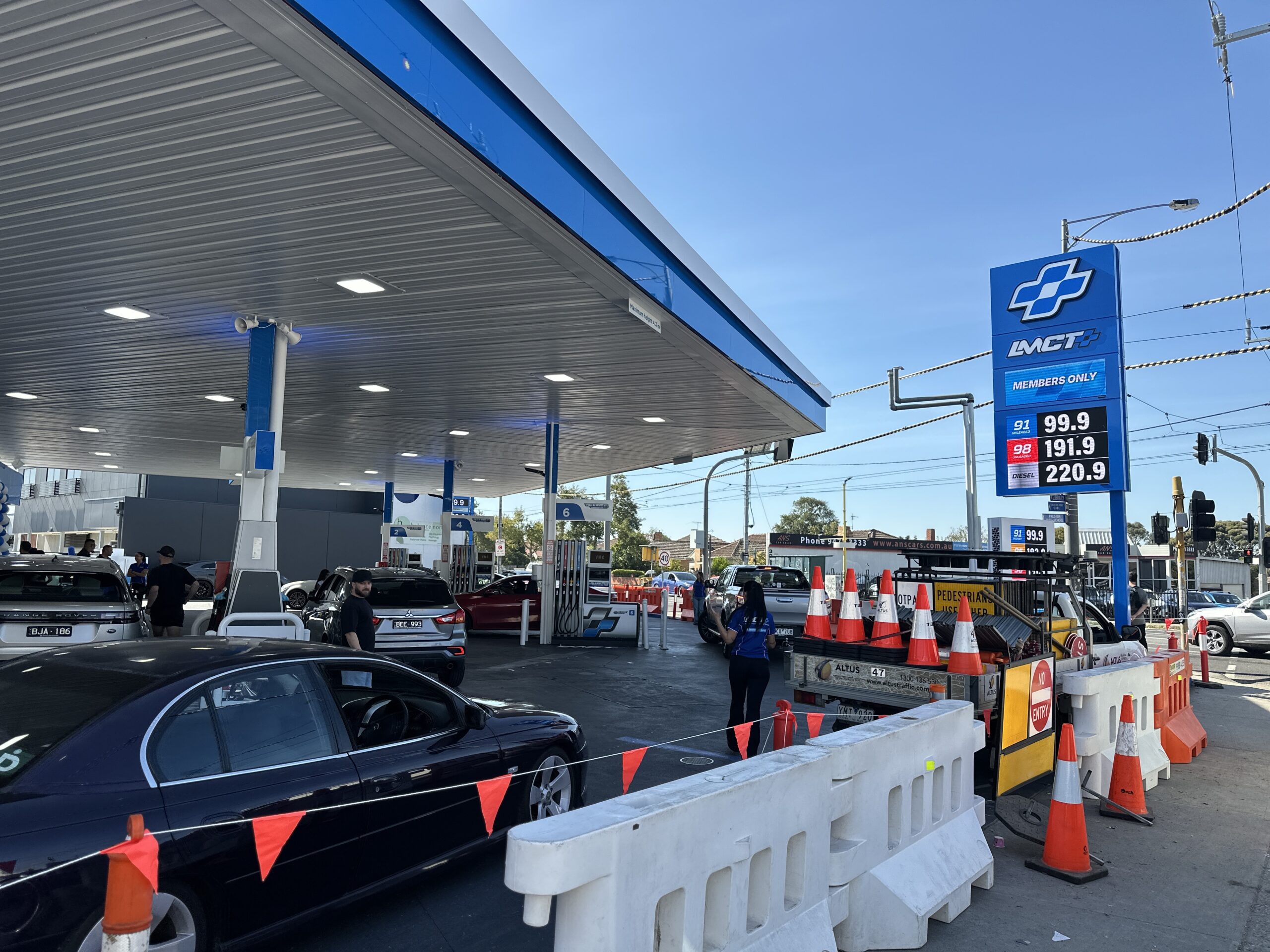
Someone asked me this at the LMCT+ Petrol launch last night. We were standing on the forecourt in Preston, surrounded by a Koenigsegg Jesko and a crowd that could barely believe what they were seeing — and the question came up: is $1 a litre petrol actually safe for your car?
It’s a fair question. And as someone who works with fuel every single day across Melbourne, I want to give you a straight answer.
What Australian Fuel Quality Law Actually Says
Every litre of petrol sold in Australia — regardless of price — must comply with the Fuel Quality Standards Act 2000. This is federal law enforced by the ACCC. It sets mandatory specifications for octane rating, sulfur content, aromatic compounds, and a range of other technical measures that directly affect engine performance and emissions.
What that means in plain terms: a litre of Unleaded 91 at LMCT+ Preston must meet the exact same legal standard as a litre of Unleaded 91 at any other servo in the country. There is no legal way for a service station to sell substandard fuel in Australia. The price cannot change that.
So Why Is It $1 a Litre?
The $1 per litre price applies to Street — LMCT+’s name for standard Unleaded 91. All other grades are sold at standard market pricing. This isn’t a charity exercise — it’s a volume and brand play. Adrian Portelli is buying fuel in significant bulk, the LMCT+ membership model supports the margin, and the whole concept is built around driving foot traffic, building the brand, and challenging the established players who have dominated Australian fuel retail for decades.
I filled up at cheap servos my whole life and so does most of Melbourne whether they admit it or not. The fuel is the same product.
What About Fuel Additives — Is Branded Fuel Better?
This is where it gets more nuanced. There is a difference between fuel grade and fuel quality, and most drivers confuse the two.
Fuel grade refers to octane rating — 91, 95, 98. That’s about engine compatibility, not quality.
Fuel quality refers to the detergent and additive packages that some retailers add on top of the base specification. Brands like Ampol, BP, and Shell blend their own proprietary additive packages into the fuel — these are designed to help keep fuel injectors and intake valves cleaner over time.
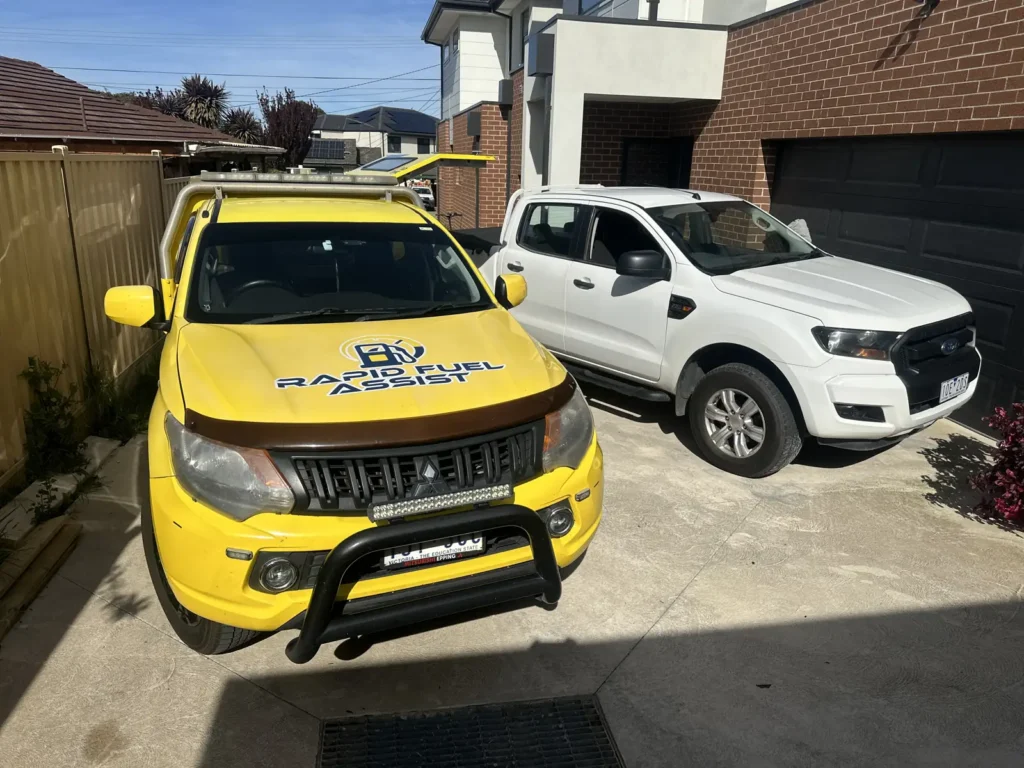
I personally use Ampol for the Rapid Fuel Assist van — purely for the convenience of the fuel card and the accounting it makes straightforward. Not because I think the fuel is safer or better for a standard commuter car. For most drivers filling up with 91 on a daily basis, the additive difference is negligible in the real world. It becomes more relevant if you’re running a high-performance engine over a very long period.
For your average Melbourne driver heading to LMCT+ Preston for $1 a litre — fill up with confidence.
Why Adrian Portelli Getting Into Fuel Is Actually a Good Thing
Beyond the price — there’s a bigger picture here worth acknowledging. Adrian Portelli is an Australian. He lives here, builds his businesses here, and is reinvesting into the local economy. When you fill up at a globally owned fuel chain, a meaningful portion of that margin leaves Australia entirely. When you fill up at LMCT+ Preston, you’re buying from an Australian-owned business backed by an Australian entrepreneur who has been vocal about wanting to take on the established players and pass savings back to everyday drivers.
That matters. And it’s worth saying out loud.
The One Genuine Risk at LMCT+ Petrol — And It’s Not the Price
We’ve written about this in detail in our first post covering the LMCT+ pre-launch, but it’s worth repeating here. The custom fuel names — Street, Sport, Race, and Torque instead of the standard 91, 95, 98, and Diesel — are the only thing at this station that gives us pause as wrong fuel specialists.
Not because the fuel is unsafe. Because unfamiliar labelling in an exciting, high-energy environment is exactly the condition under which wrong fuel mistakes happen. We saw it opening day — constant traffic, well-directed by on-site staff, but still self-serve at the pump. The onsite manager told us himself he has seen wrong fuel incidents at petrol stations many times across his career. The risk is real even when everything else is well run.
Read our full breakdown of the fuel labelling and what each name means here: READ HERE
We Were On Site at the Opening — Here’s What We Saw
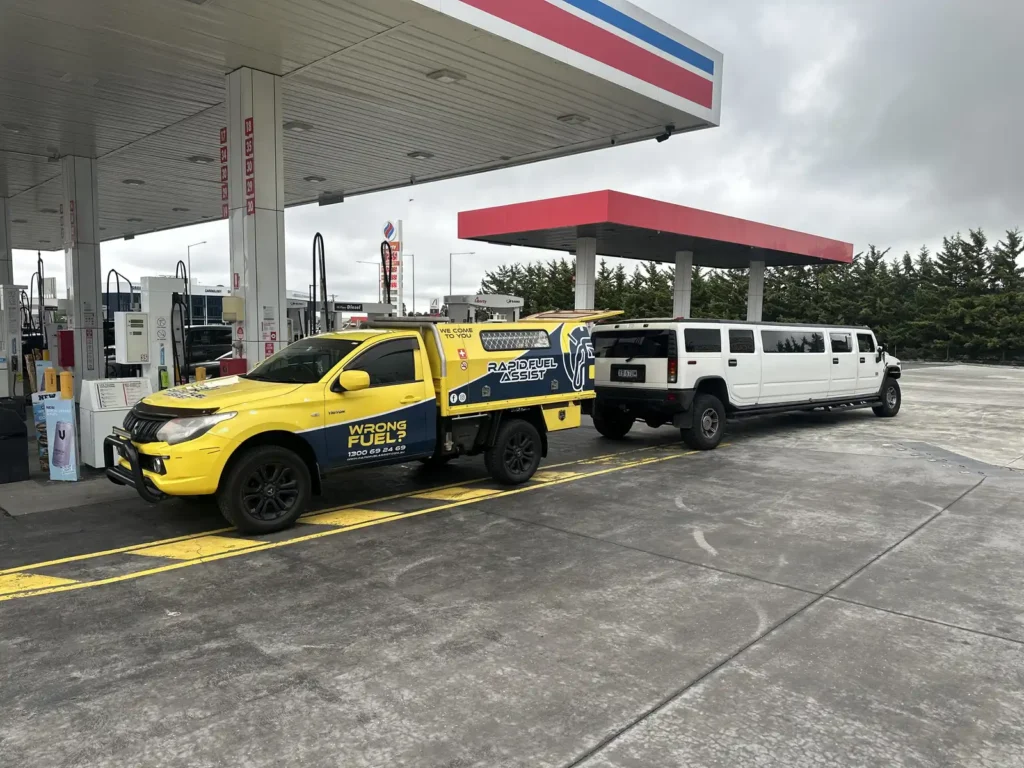
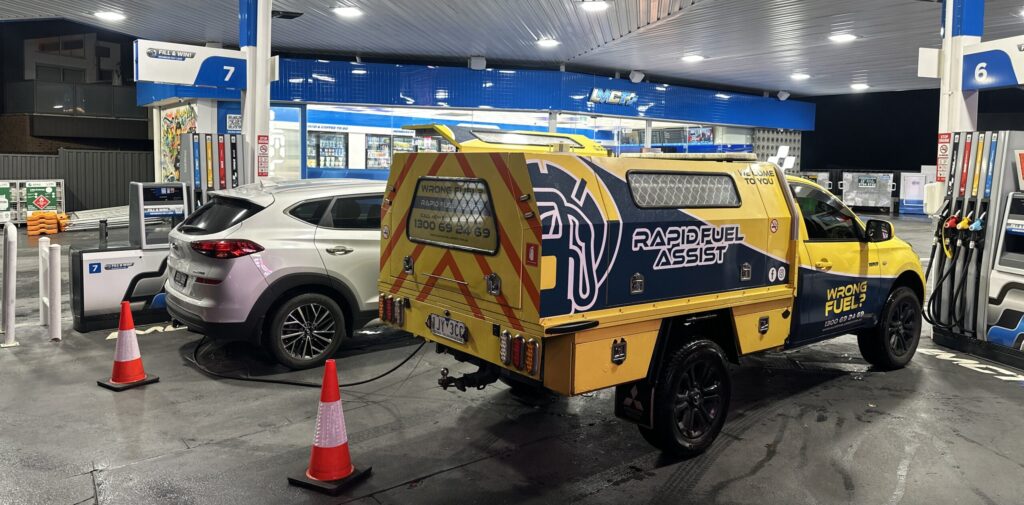
We were at the pre-launch event the night before and back on site for opening day today. The operation was genuinely impressive — constant flow of traffic, staff everywhere directing vehicles to the pumps, no chaos, no queues snaking down Plenty Road. Adrian Portelli was on site doing media interviews. We spoke with a Channel 10 reporter about the wrong fuel risk from the custom labelling. We spoke with the onsite manager, left a box of our business cards, and made sure they knew we were available if anyone made a mistake at the pump.
The station is well run. The concept is exciting. And we’ll be keeping a close eye on it as Melbourne drivers get familiar with a new way of filling up.
The Bottom Line
$1 petrol at LMCT+ Preston is completely safe. It meets the same mandatory Australian fuel standards as every other servo in the country. The price is real, the fuel is legal, and Adrian Portelli has built something genuinely worth supporting.
Just read the pump label before you pick up the nozzle. Street is 91. Torque is Diesel. Five seconds of attention could save you a very expensive phone call — though if you do need that call, you know where to find us.
Wrong fuel in Melbourne? Call Rapid Fuel Assist — mobile wrong fuel rescue across Melbourne Metro. Fixed pricing, no tow truck, no-fix-no-fee guarantee. Find us at rapidfuelassist.com.au.