
One of the most common questions we hear from customers is which is worse — petrol in diesel or diesel in petrol? It is a fair question, and the answer is more nuanced than most people expect. Both scenarios are fixable. Both can cause damage if handled incorrectly. And both happen far more often than most drivers would believe — to careful, experienced drivers who simply had a momentary lapse at the bowser. Here is what actually happens in each case, why one is significantly more common than the other, and what you should do if it happens to you.
Petrol in Diesel — The More Common and More Serious Scenario
Putting petrol into a diesel vehicle is by far the more common of the two misfuel scenarios. The majority of wrong fuel jobs Rapid Fuel Assist attends across Melbourne are petrol in diesel — diesel in petrol is comparatively rare, with some weeks seeing very few or no callouts at all for that scenario.
The reason petrol in diesel is more serious comes down to how diesel engines are designed. Diesel fuel acts as a lubricant for the high pressure fuel pump and injectors — components that operate under enormous pressure and with extremely tight tolerances. Petrol has no lubricating properties. When petrol enters a diesel fuel system it strips that lubrication, causing metal-on-metal contact at high pressure. The longer the engine runs on contaminated fuel, the greater the exposure and the higher the risk of pump and injector damage.
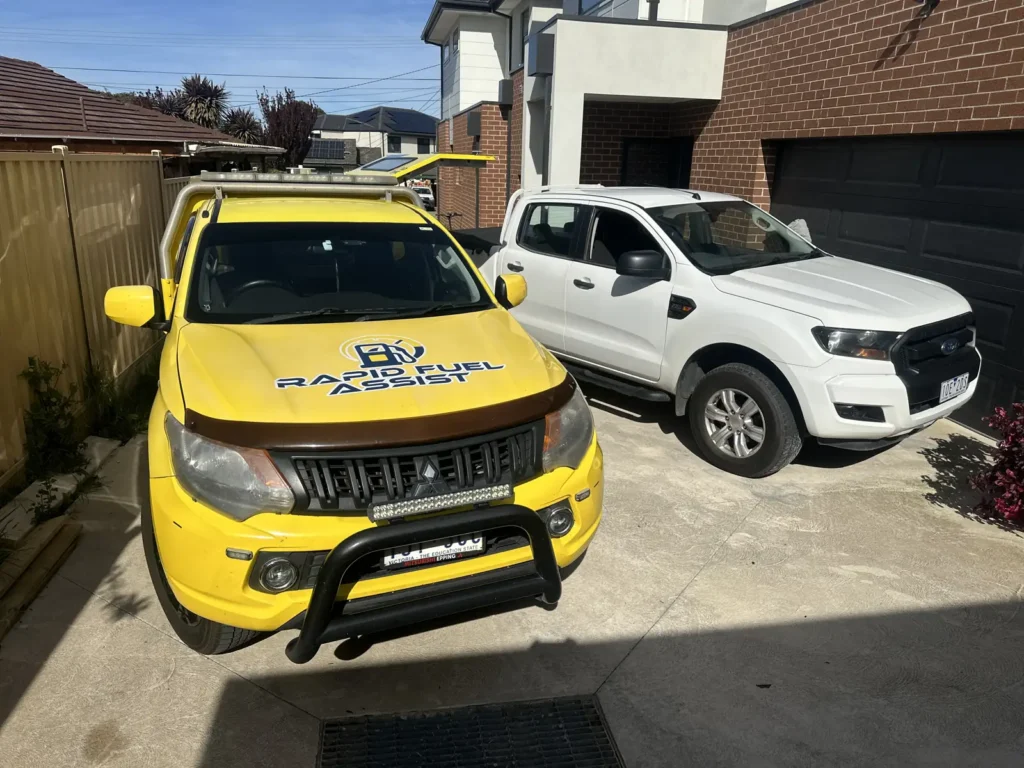
The most commonly affected vehicles we see in Melbourne reflect the most popular diesel vehicles on Australian roads — Ford Ranger, Ford Everest, Kia Carnival, Hyundai Santa Fe and Kia Sorento appear regularly. These are family vehicles and work vehicles driven by people who know exactly what they are doing — and still make the mistake.
Why Does Petrol in Diesel Happen So Often?
The reasons are more varied than you might expect.
Distraction is the single biggest factor. The moment between picking up the pump and starting to fill is brief — a child in the back seat, a phone notification, a conversation — and the wrong nozzle is already in the tank before attention returns. Many customers do not realise the mistake until they are driving away, or until they notice the pump label when returning it to the bowser.
Upgrading vehicles is another common trigger. A driver who has owned a petrol car for ten or more years then upgrades to a diesel family vehicle — a Kia Carnival being a very common example in Melbourne right now — can default to habit without thinking. The muscle memory of reaching for the familiar pump overrides the conscious knowledge that the new car takes a different fuel.
Hire cars and tourist drivers account for a significant number of misfuel incidents. Fuel naming conventions differ between countries — what is labelled one way in Europe or Asia may be labelled differently in Australia. Many international visitors have never filled a vehicle themselves and are unfamiliar with Australian service stations entirely. The result is genuine confusion at the bowser with no malicious intent.
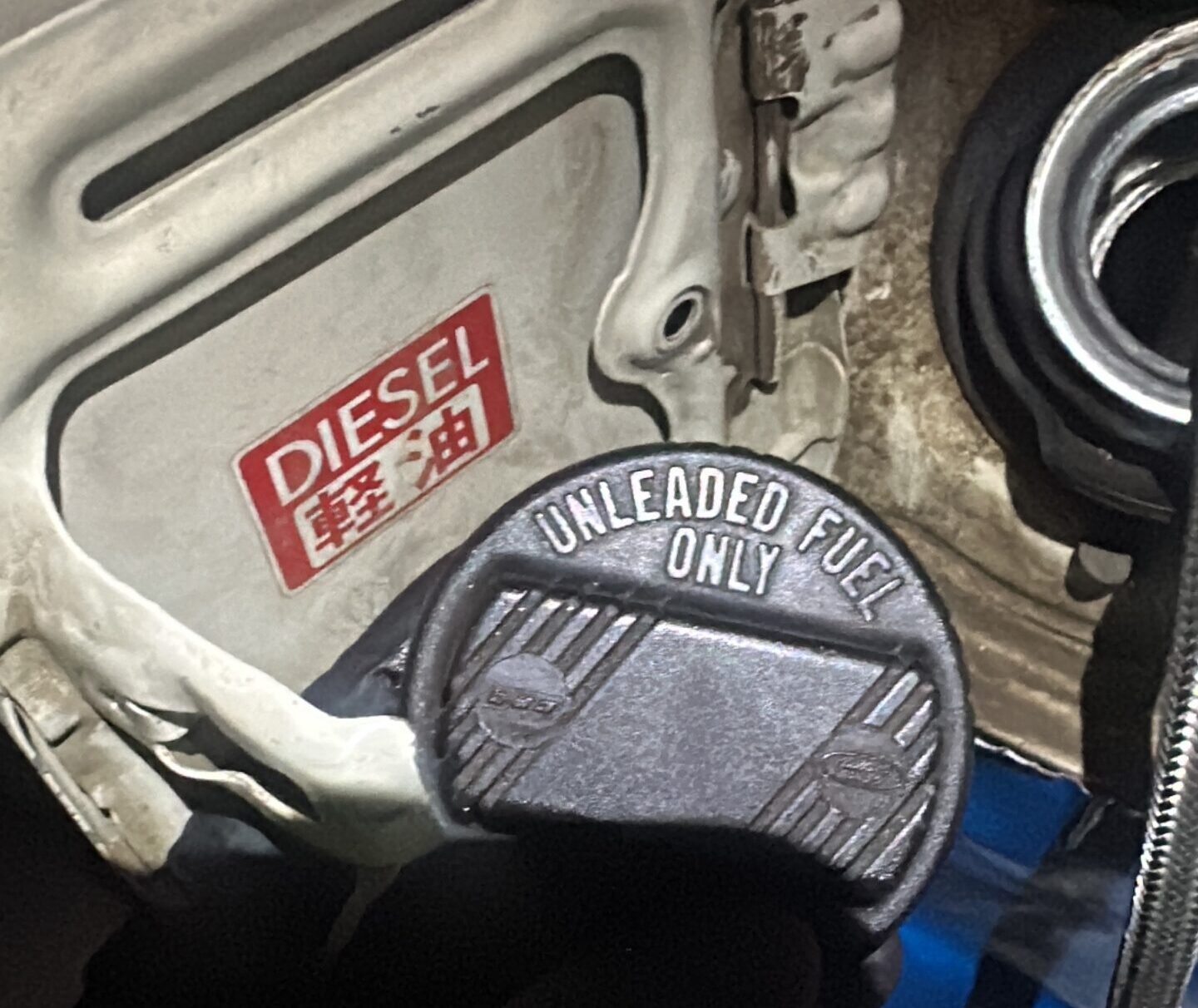
Borrowed vehicles are another scenario we see regularly. A driver borrows a friend’s or family member’s vehicle without being clearly told what fuel it takes, makes an assumption based on the type of vehicle, and fills with the wrong fuel. We recently attended a Toyota HiAce diesel van where the customer had filled with petrol — the fuel cap was labelled petrol from a previous configuration, while the fuel door was labelled diesel. The customer saw only the fuel cap label and acted on it. A completely understandable mistake with a simple explanation.
And then there are the customers who know exactly what fuel the car takes, are paying full attention, and still put the wrong nozzle in. It happens. The bowser layout, the colour coding, the moment of routine — sometimes the wrong fuel simply goes in.
Diesel in Petrol — Less Common, Different Consequences
Diesel in a petrol vehicle is a less common scenario and generally considered less immediately damaging — but it is not without consequences, and it should never be driven on without addressing it first.
When diesel enters a petrol engine it does not combust cleanly. Petrol engines rely on spark ignition and diesel fuel does not ignite correctly in this environment. The result is typically heavy misfiring, rough running, loss of power, excessive smoke from the exhaust and in most cases the engine will stop running — often fairly quickly.
Here is the counterintuitive part: a full tank fill of diesel in a petrol car can actually be less risky than a partial fill. When a petrol car is filled from near-empty with diesel, the engine tends to run poorly and stop within a short distance — limiting the time contaminated fuel circulates and reducing the risk of ongoing damage. The car stops, the driver realises something is wrong and calls for help.
The more problematic scenario is a partial diesel contamination in a petrol tank that still has significant petrol remaining. In this case the mixture may allow the engine to keep running — misfiring, smoking, running roughly — but running. This extended operation on a contaminated mixture is where more cumulative damage to spark plugs, injectors and other components can occur.
Regardless of how much diesel has entered the tank, the correct approach is always the same — stop the engine, do not drive and call Rapid Fuel Assist for a drain and flush before attempting to restart.
Which Is Actually Worse?
Petrol in diesel carries the higher risk of serious and costly damage — particularly to the high pressure fuel pump and injectors — if the engine is run on contaminated fuel. The lubricating properties of diesel are critical to these components and petrol actively damages them under operating conditions.
Diesel in petrol is generally less immediately catastrophic, but it is not safe to drive on and should be treated with the same urgency. A common misconception is that a small amount of diesel in a large petrol tank is harmless or will burn off. It will not burn cleanly, it will affect engine operation and it will cause fouling and wear over time.
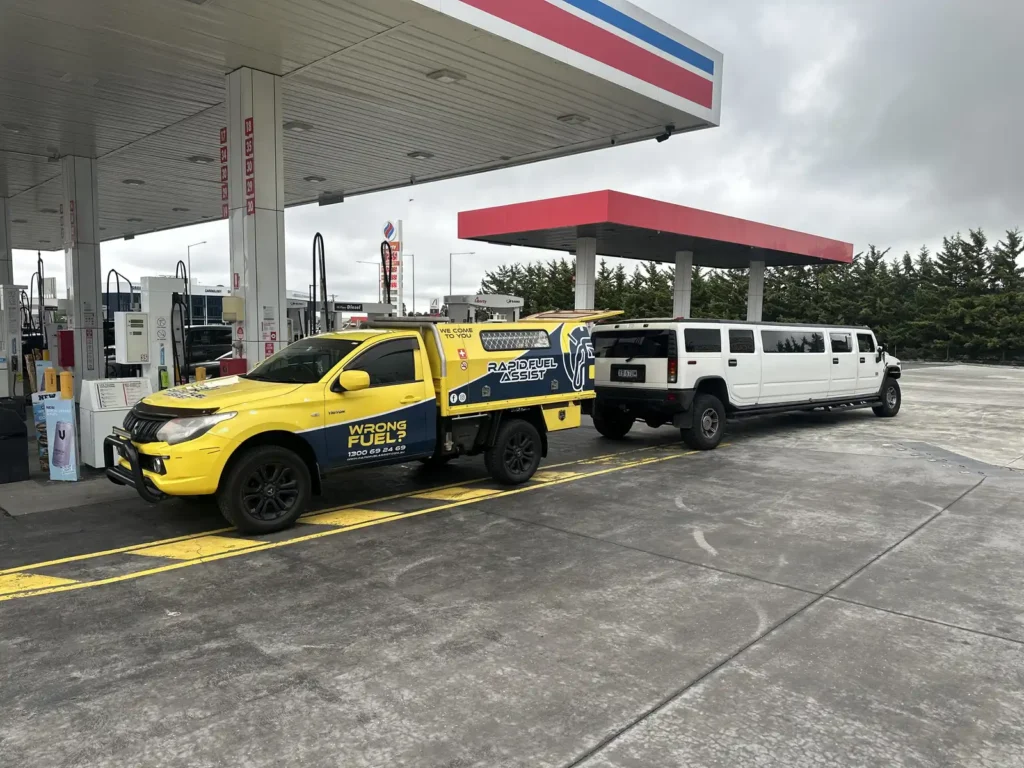
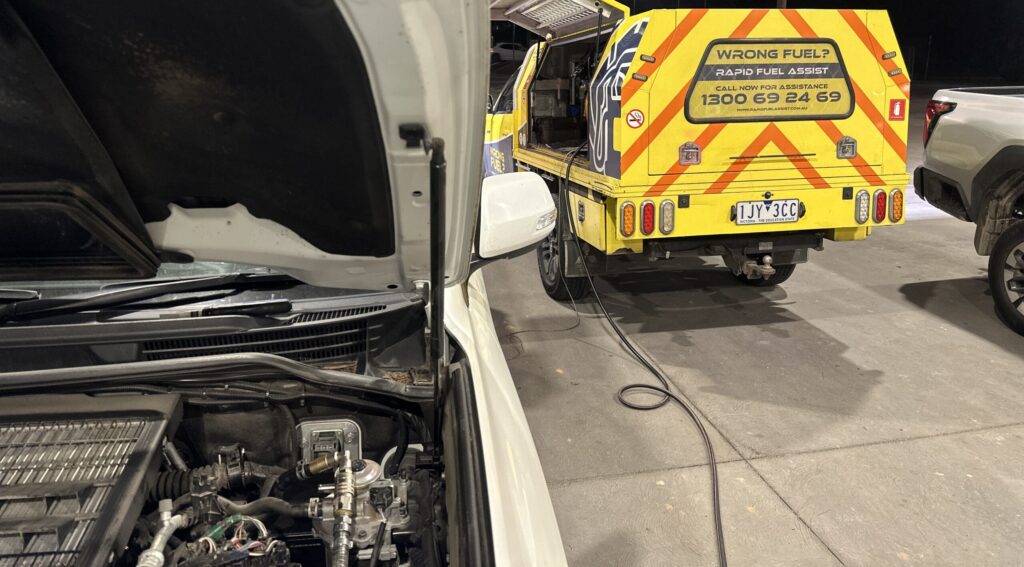
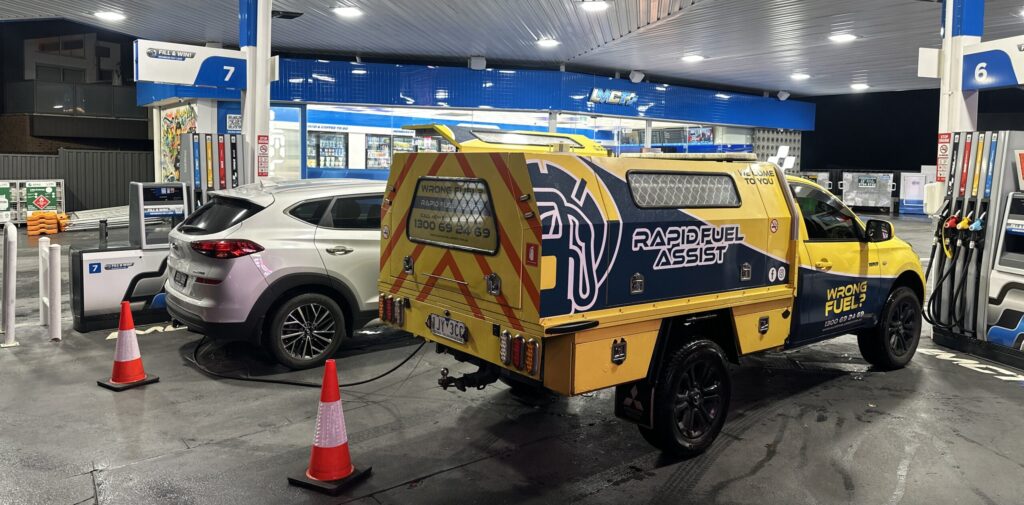
Both scenarios are fixable. In the vast majority of cases — whether petrol in diesel or diesel in petrol, whether the engine has been started or not — Rapid Fuel Assist can attend, drain the system, flush and refuel on-site and return your vehicle to normal operation without towing or workshop repairs.
The single most important variable in either scenario is not which fuel went in — it is how quickly you stop and call.
Wrong fuel in Melbourne — petrol in diesel or diesel in petrol? Call Rapid Fuel Assist on 1300 692 469. We attend within 30 to 60 minutes across Melbourne Metro, resolve the issue on-site and have your vehicle back on the road fast. Available 7 days, fixed pricing, no call out fee.