
From LMCT+ Street and Torque to UGO, Solo, Shell V-Power and Ampol — What’s Actually in the Pump
Why We Wrote This Post
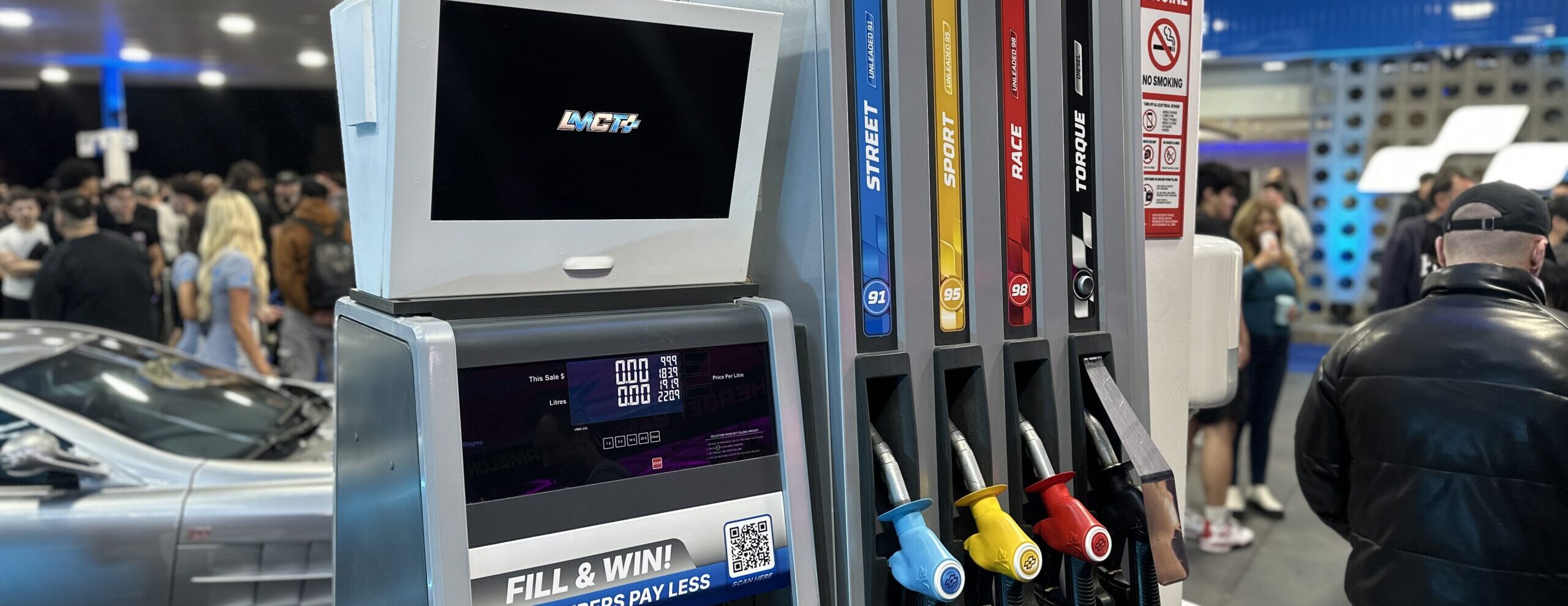
Shortly after our LMCT+ Petrol Preston post went live, we received a phone call from a driver who had visited the station. They were not calling about a wrong fuel incident. They were calling because they could not work out whether any of the LMCT+ fuels contained ethanol — and they specifically needed to avoid it.
The labels on the pumps — Street, Sport, Race, Torque — told them nothing about ethanol content. And that is a completely legitimate concern. Ethanol-blended fuel is incompatible with a significant number of vehicles, older engines, motorbikes, marine equipment, and small machinery. For those drivers, knowing whether a fuel contains ethanol is not a preference — it is a necessity.
That call made us realise there is a gap in publicly available information about how Australian petrol station fuel labels work, what they are legally required to show, and how non-standard branding can leave drivers genuinely confused at the pump.
This post fills that gap.
Wrong Fuel Is Not Just About Petrol and Diesel
When most people think about wrong fuel incidents, they picture the classic scenario — petrol nozzle in a diesel tank, or diesel in a petrol car. These are the most common scenarios we attend across Melbourne, and the most damaging.
But wrong fuel incidents are broader than that. Using a fuel grade that is incompatible with your vehicle is also a form of wrong fuel — and it causes real damage:
- E10 or E85 ethanol-blended fuel in a vehicle not designed to run on ethanol — can cause fuel system corrosion, seal degradation, and phase separation in older vehicles, motorbikes, marine engines, and small equipment
- 91 RON unleaded in a vehicle that requires 95 or 98 RON — can cause engine knock, reduced performance, and long-term damage in high-compression or turbocharged engines
- E85 in a standard petrol vehicle — E85 is 70 to 85 percent ethanol and is only compatible with specific flex-fuel vehicles. In a standard car it will cause severe running issues and potential fuel system damage
- Premium diesel in a standard diesel vehicle — while not damaging in most cases, it is an unnecessary cost and can cause confusion at unfamiliar stations
The common thread in all of these is the same as a petrol-in-diesel incident — the driver did not know exactly what they were putting in the tank. Label clarity is not a cosmetic issue. It is a safety issue.
What Australian Law Actually Requires on Fuel Labels
Fuel labelling in Australia is governed by the Fuel Quality Standards Act 2000, administered by the Department of Climate Change, Energy, the Environment and Water. The Act sets mandatory standards for fuel quality and labelling across every fuel type sold at Australian service stations.
The rules around ethanol are particularly strict — and for good reason. Under Australian law, any fuel containing ethanol must be clearly labelled to disclose the ethanol content. This is not optional, and it is not a courtesy — it is a legal requirement with serious penalties for non-compliance.
Retailers who fail to comply with fuel quality and labelling laws face significant penalties. Civil penalties for companies can reach up to $1.575 million per breach. Individuals involved in deliberate or reckless breaches face fines of up to $315,000 or imprisonment of up to two years. Mislabelling or misrepresenting a fuel grade also constitutes a breach of the Competition and Consumer Act 2010, with corporate penalties reaching up to $50 million.
The specific labelling requirements for ethanol-blended fuels are set out in two key documents — the Fuel Quality Standards (Ethanol) Information Standard 2019 for E10, and the Fuel Quality Standards (Ethanol E85) Information Standard 2019 for E85. Both are publicly available on the Australian Federal Register of Legislation.
Australian Fuel Quality Standards — Department of Climate Change, Energy, the Environment and Water
Fuel Quality Standards (Petrol) Determination 2024 — Federal Register of Legislation
Ethanol Fuels — What You Need to Know Before You Pump
Ethanol is a renewable alcohol-based fuel additive derived from plant material. In Australia, two ethanol blends are available at service stations:
E10 — Up to 10% Ethanol
E10 is the most common ethanol blend at Australian service stations. It contains up to 10 percent ethanol blended with standard unleaded petrol. Most modern vehicles manufactured after 2000 are compatible with E10, but there are important exceptions:
- Most motorcycles — many manufacturers specifically advise against E10 use
- Marine engines and outboard motors — ethanol attracts water and can cause phase separation in boat fuel tanks, leading to serious engine damage
- Older vehicles — rubber seals and fuel lines in pre-2000 vehicles may degrade with ethanol exposure
- Small equipment — lawnmowers, generators, chainsaws and similar equipment are often incompatible with ethanol blends
- Some classic and vintage vehicles — fuel system components may not be ethanol compatible
E10 must always be clearly labelled at the pump. If you are unsure whether your vehicle can use E10, check your owner’s manual or the fuel cap — most manufacturers print the compatible fuel type directly on the fuel filler cap. You can also call us if you are unsure.
E85 — 70 to 85% Ethanol
E85 is a high-ethanol blend containing between 70 and 85 percent ethanol. It is only compatible with specifically designed flex-fuel vehicles. Putting E85 into a standard petrol vehicle is a serious wrong fuel incident — it will cause severe running issues, potential fuel system damage, and will require a full drain and flush to resolve.
E85 is currently available at a small number of service stations in Australia. Under Australian law it must be prominently labelled, and the labelling requirements are set out separately from standard ethanol blends under the Fuel Quality Standards (Ethanol E85) Information Standard 2019.
How Australian Fuel Brands Label Their Pumps — And What It All Means
Every major fuel retailer in Australia sells the same core fuel grades — 91 RON unleaded, 95 RON premium, 98 RON premium, diesel, and in many cases E10. What changes between brands is the marketing name applied to each grade. Here is a plain English translation:
| Brand | Pump Label | What It Actually Is | RON Rating | Contains Ethanol? |
|---|---|---|---|---|
| Shell | Unleaded 91 | Standard unleaded petrol | 91 RON | No |
| Shell | Unleaded 95 | Premium unleaded | 95 RON | No |
| Shell | V-Power 98 | Premium unleaded | 98 RON | No |
| Shell | Unleaded E10 | Ethanol blend | 94 RON | Yes — up to 10% |
| Shell | Diesel | Standard diesel | — | No |
| Shell | V-Power Diesel | Premium diesel | — | No |
| BP | Regular Unleaded 91 | Standard unleaded petrol | 91 RON | No |
| BP | BP 95 | Premium unleaded | 95 RON | No |
| BP | BP Ultimate 98 | Premium unleaded | 98 RON | No |
| BP | E10 | Ethanol blend | 94 RON | Yes — up to 10% |
| BP | Diesel | Standard diesel | — | No |
| BP | Ultimate Diesel | Premium diesel | — | No |
| Ampol | Unleaded 91 | Standard unleaded petrol | 91 RON | No |
| Ampol | Amplify 95 | Premium unleaded | 95 RON | No |
| Ampol | Amplify 98 | Premium unleaded | 98 RON | No |
| Ampol | E10 | Ethanol blend | 94 RON | Yes — up to 10% |
| Ampol | Diesel | Standard diesel | — | No |
| Ampol | Amplify Premium Diesel | Premium diesel | — | No |
| 7-Eleven | Unleaded 91 | Standard unleaded petrol | 91 RON | No |
| 7-Eleven | Premium 95 | Premium unleaded | 95 RON | No |
| 7-Eleven | Premium 98 | Premium unleaded | 98 RON | No |
| 7-Eleven | E10 | Ethanol blend | 94 RON | Yes — up to 10% |
| 7-Eleven | Diesel | Standard diesel | — | No |
| Liberty | Unleaded 91 | Standard unleaded petrol | 91 RON | No |
| Liberty | Premium 95 | Premium unleaded | 95 RON | No |
| Liberty | Premium 98 | Premium unleaded | 98 RON | No |
| Liberty | Diesel | Standard diesel | — | No |
| UGO | Unleaded 91 | Standard unleaded petrol | 91 RON | No |
| UGO | U95 | Premium unleaded | 95 RON | No |
| UGO | U98 | Premium unleaded | 98 RON | No |
| UGO | E10 | Ethanol blend | 94 RON | Yes — up to 10% |
| UGO | Diesel | Standard diesel | — | No |
| UGO | P Diesel | Premium diesel | — | No |
| Solo | Unleaded 91 | Standard unleaded petrol | 91 RON | No |
| Solo | E10 Unleaded | Ethanol blend | 94 RON | Yes — up to 10% |
| Solo | PremiumAx 98 | Premium unleaded | 98 RON | No |
| Solo | Diesel | Standard diesel | — | No |
| Solo | Premium Diesel | Premium diesel | — | No |
| United | Unleaded 91 | Standard unleaded petrol | 91 RON | No |
| United | Premium 95 | Premium unleaded | 95 RON | No |
| United | Premium 98 | Premium unleaded | 98 RON | No |
| United | E10 | Ethanol blend | 94 RON | Yes — up to 10% |
| United | E85 Race Blend | High ethanol blend — flex-fuel vehicles ONLY | 107 RON | Yes — 85% ethanol |
| United | Diesel | Standard diesel | — | No |
| LMCT+ | Street | Standard unleaded petrol | 91 RON | No |
| LMCT+ | Sport | Premium unleaded | 95 RON | No |
| LMCT+ | Race | Premium unleaded | 98 RON | No |
| LMCT+ | Torque | Diesel | — | No |
LMCT+ Petrol Preston — A Special Case Worth Noting
We have covered LMCT+ Petrol Preston in detail in a previous post. For the purposes of this guide, the key facts are:
Street is standard Unleaded 91 — no ethanol. Sport is 95 RON premium. Race is 98 RON premium. Torque is diesel. None of the current LMCT+ fuels contain ethanol.
The caller who prompted this post was specifically concerned about ethanol content — and the answer for LMCT+ is that none of their current grades contain it. However the pump labels do not make this obvious, which is exactly why the question was asked.
It is worth noting that Adrian Portelli has publicly indicated interest in bringing E85 to the LMCT+ Petrol stations in the future. E85 is a high-ethanol flex fuel compatible only with specific flex-fuel vehicles. If and when E85 is introduced, it will be required by law to carry prominent, specific labelling clearly distinguishing it from standard unleaded grades. Drivers visiting LMCT+ should watch for any new pump additions and verify compatibility with their vehicle before filling.
UGO and Solo — The Growing Discount Independents
UGO and Solo are two of the fastest growing independent fuel brands in Australia — both positioned as low-cost, no-frills alternatives to the major brands. Understanding where they came from and what they sell matters for drivers who want to know exactly what they are putting in their tank.
UGO — Self-Service, Low Cost, Standard Grades
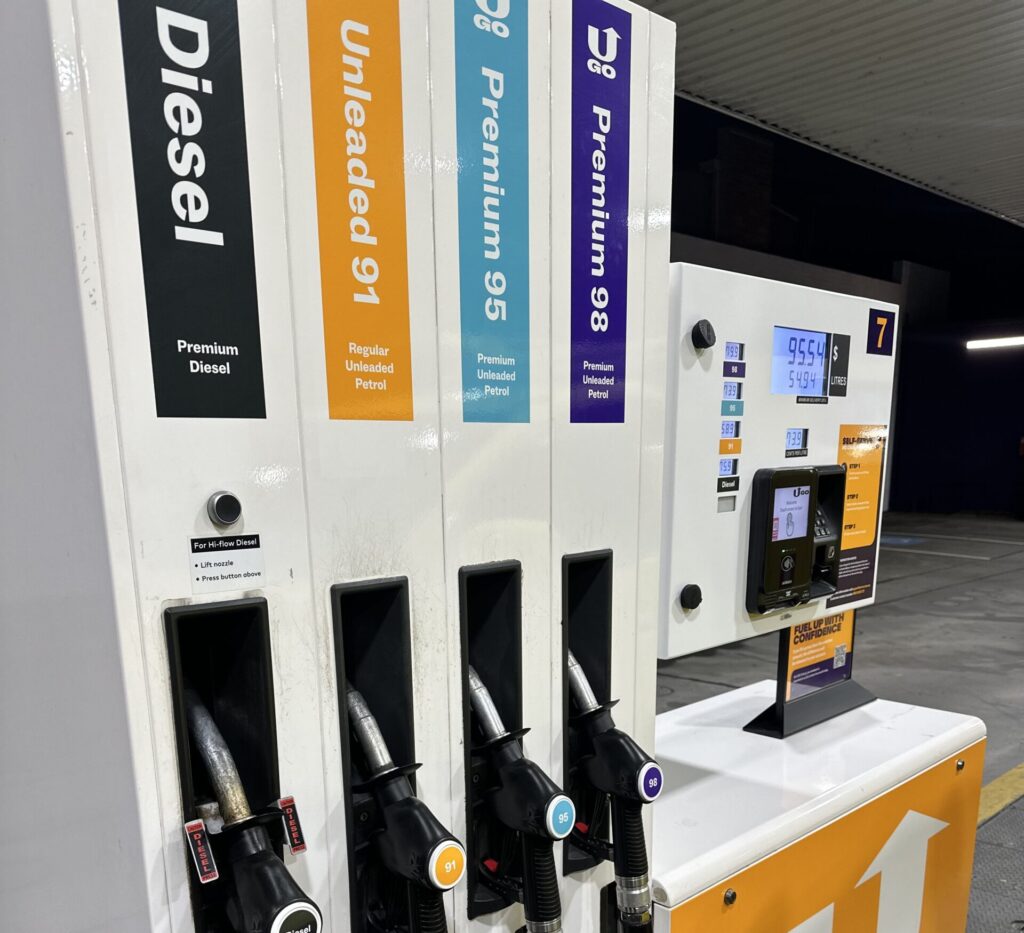
UGO operates 45 stations across six states as a fully self-serve, pay-at-pump model. Their fuel grades are straightforward — Unleaded 91, U95, U98, Diesel, Premium Diesel, and E10. All fuels meet Australian Fuel Quality Standards. The E10 grade is clearly labelled as an ethanol blend. For drivers avoiding ethanol, UGO’s standard Unleaded, U95, U98 and diesel grades contain no ethanol.
Solo — A Historic Name Revived
Solo has a long history in Australian fuel retail. Founded in 1974, it became the largest independent fuel retailer in Australia before being sold to Ampol in 1989. In 2025 the Solo brand was revived, rebranding a number of existing Liberty sites across Victoria, Queensland and South Australia. Solo positions itself as a discount provider — the same founding philosophy it launched with fifty years ago. Fuel grades at Solo sites follow standard labelling conventions.
Colour Coding at the Pump — Why It Is Not Standardised
Many drivers rely on colour coding to identify fuel grades quickly at the pump. Green for unleaded, black for diesel — it feels intuitive. The problem is that colour coding is not standardised across Australian fuel brands. Different chains use different colours for the same grades, and some use the same colours for different grades.
At unfamiliar stations — particularly new, independently branded stations or international brands — relying on colour alone is a reliable path to a wrong fuel incident. Always read the label, not just the colour.
The One Rule That Applies at Every Petrol Station in Australia
Regardless of what brand name appears on the pump, regardless of what colour the nozzle is, and regardless of how creative the marketing language gets — one rule applies everywhere:
Check the actual fuel grade — the RON rating or fuel type — before you insert the nozzle. Not the brand name. Not the colour. The grade.
Your owner’s manual or fuel cap will tell you exactly what your vehicle requires. If the pump label does not clearly show the fuel type and whether it contains ethanol — ask someone or check the station’s website before filling.
Put the Wrong Fuel In? Call Rapid Fuel Assist Immediately.
Whether it is petrol in a diesel tank, E85 in a standard vehicle, or 91 RON in a car that requires 98 — if you have put the wrong fuel in your vehicle in Melbourne, do not start the engine. Call Rapid Fuel Assist. We attend across Melbourne Metro within 20 to 45 minutes, drain and flush on the spot, and have you back on the road fast.
Call 1300 692 469 — 24 hours a day, 7 days a week.
No fix. No fee. No drama.