
Wrong fuel in a fleet vehicle Melbourne is one of the most disruptive and avoidable incidents a fleet manager will deal with. It happens regularly — often more regularly than fleet operators expect — and the way it is handled directly affects how quickly the driver gets back on the road, what the repair costs, and whether the vehicle is out of action for hours or days. Here is everything you need to know.
Why Fleet Vehicles Get Misfuelled More Often Than You Think
Fleet vehicles are misfuelled at least as often as privately owned cars — and in our experience possibly more. The reason is straightforward: familiarity.
A driver in their own car fills it up every week. They know the fuel type without thinking. A fleet vehicle is often a second vehicle — one the driver switches in and out of, shares with other employees, or receives as a replacement every few years. That constant rotation between a familiar personal car and an unfamiliar work vehicle creates exactly the conditions where a misfuelling mistake happens.
The driver is not careless. They are simply not as attuned to a vehicle they did not choose and do not live with daily. It is one of the most consistent patterns we see across the fleet jobs we attend.
What Types of Fleet Vehicles Do We Attend?
The short answer is all of them. The vehicles involved in fleet misfuelling jobs depend entirely on the fleet itself — what the company provides its employees and for what purpose.
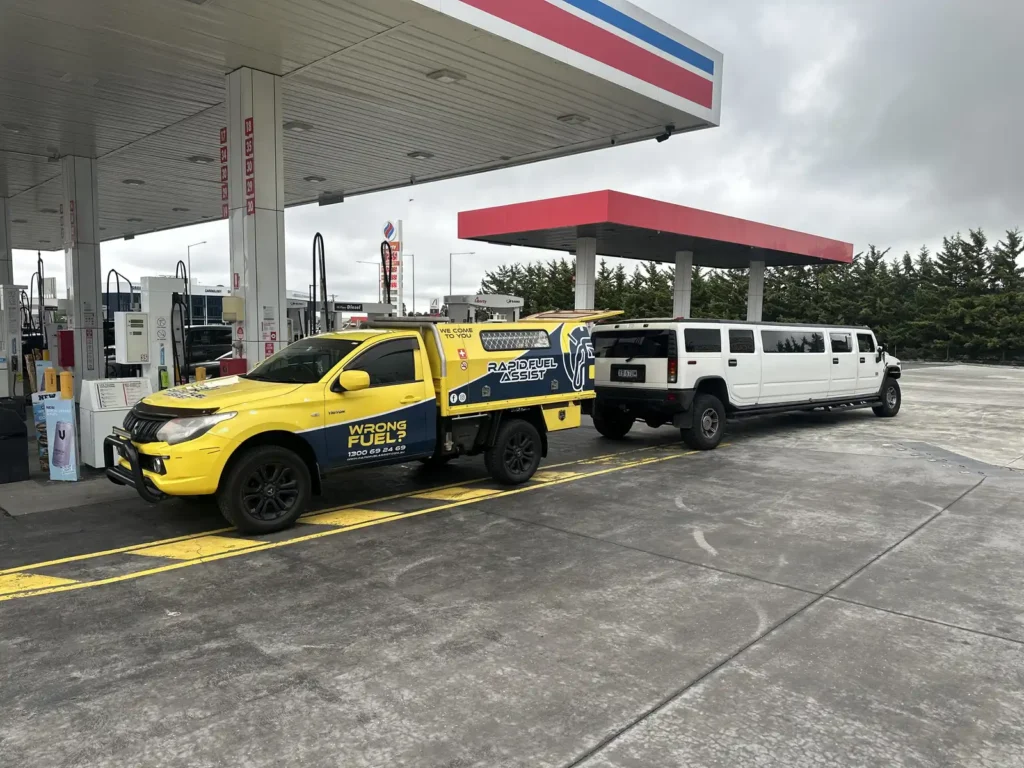
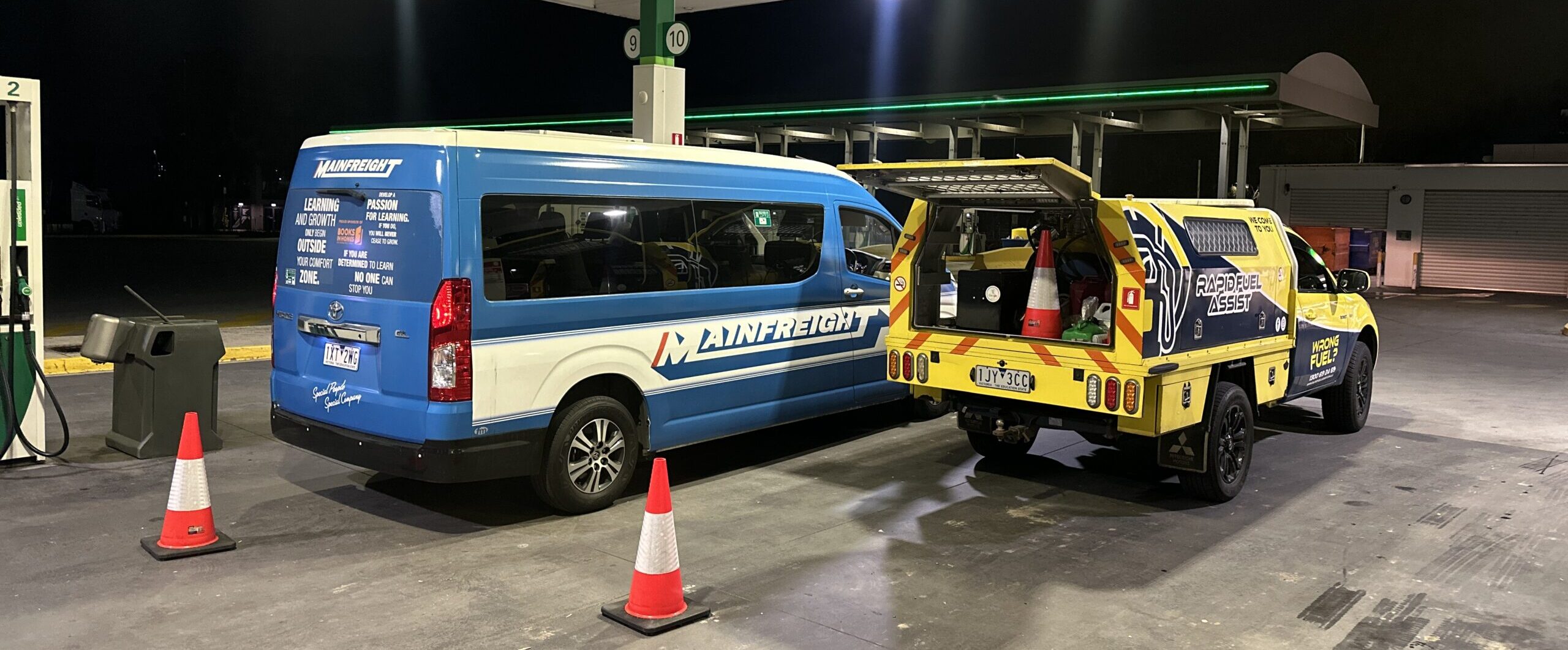
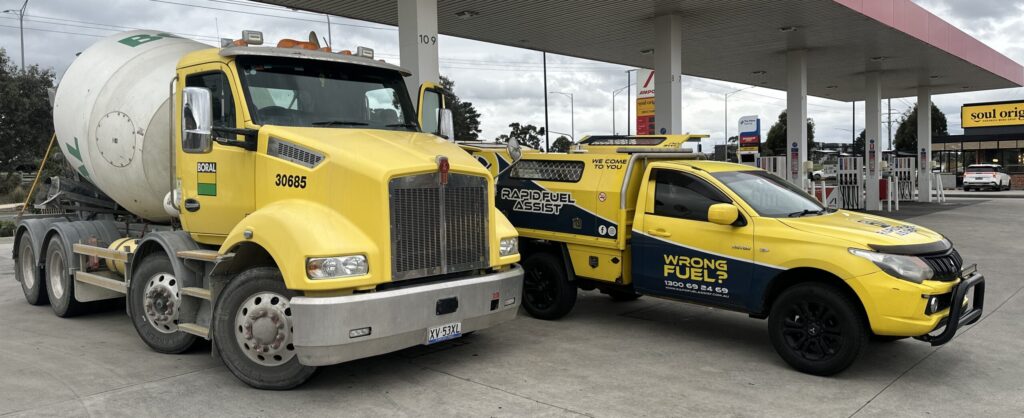
We have attended wrong fuel jobs on fleet utes, vans, passenger sedans, people movers, trucks and light commercial vehicles. Trades companies tend to run diesel utes and vans. Corporate fleets tend to run passenger cars and SUVs. Logistics and delivery operators run light commercial vans. All of them are subject to the same misfuelling risk when drivers rotate between vehicles or fill up in a hurry.
If your company runs any diesel vehicles — and most mixed fleets do — wrong fuel is a when, not an if.
Do Fleet Operators Usually Have a Process in Place?
Some do, but most did not until after it happened the one or more times.
When we receive an enquiry about a misfuelled fleet vehicle it is rarely the first incident the company has experienced. Early on, many fleet operators had a process that amounted to calling roadside assistance, arranging a tow to a mechanic workshop, and waiting — sometimes days — for the vehicle to be repaired and returned. That process is expensive, slow, and completely unnecessary for a wrong fuel incident that can be resolved on the spot in under an hour.
Over time fleet managers have recognised the disruption that misfuelling causes and started looking for a better solution. That is how many of our ongoing fleet relationships have started — a driver called us directly after a job, mentioned to their fleet manager that there was a faster and cheaper way to handle it, and the company updated their process accordingly.
If your fleet does not yet have a dedicated wrong fuel rescue provider on file, it is worth adding one before the next incident rather than scrambling after it.
What Happens When You Call Us for a Fleet Job
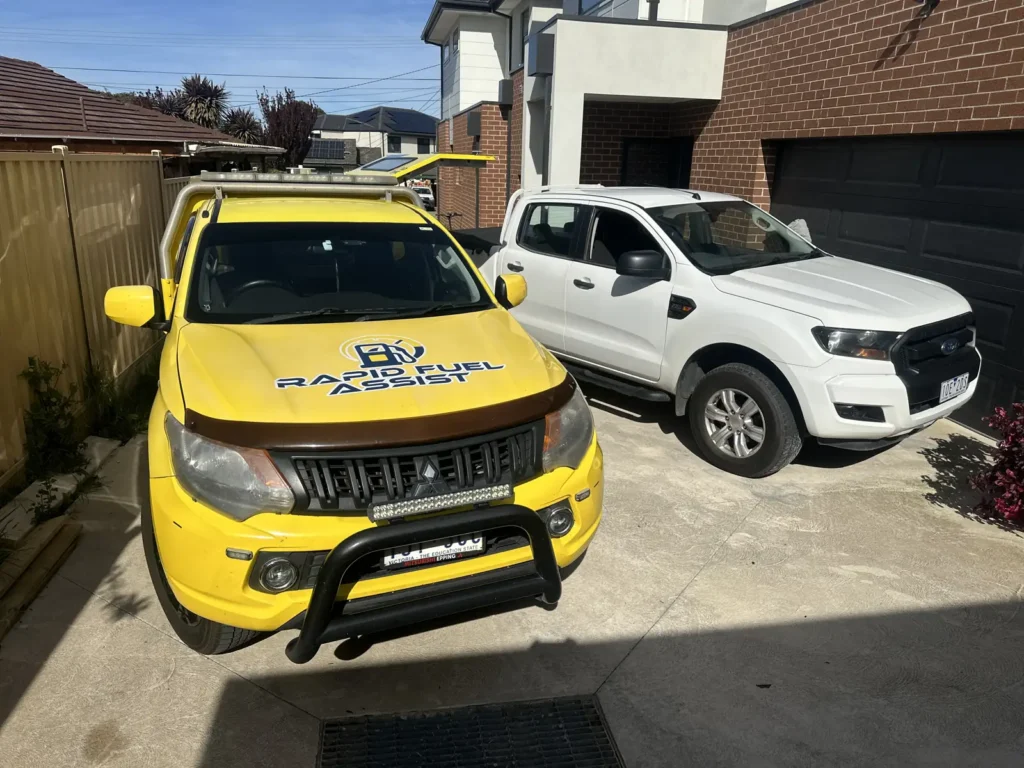
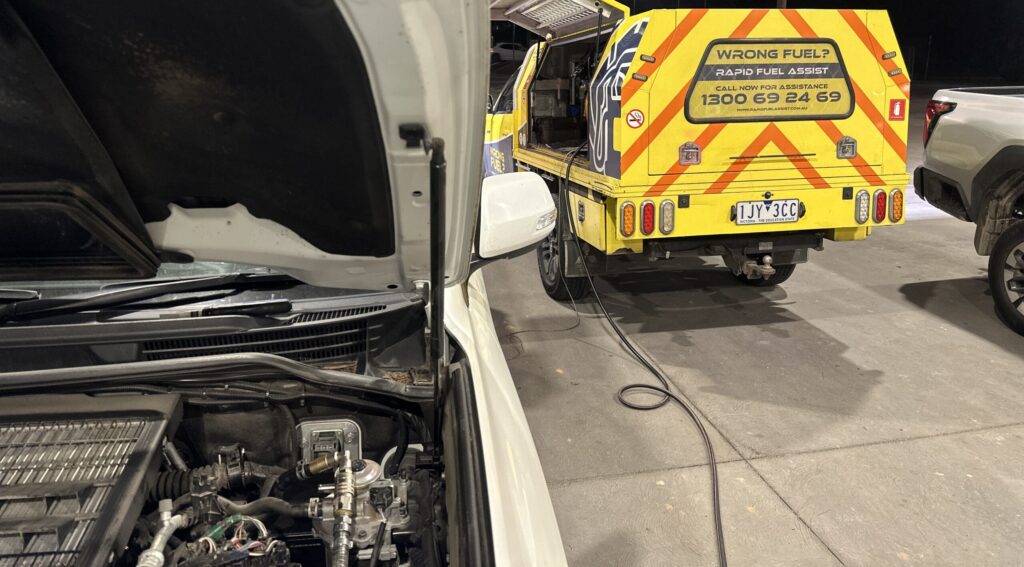
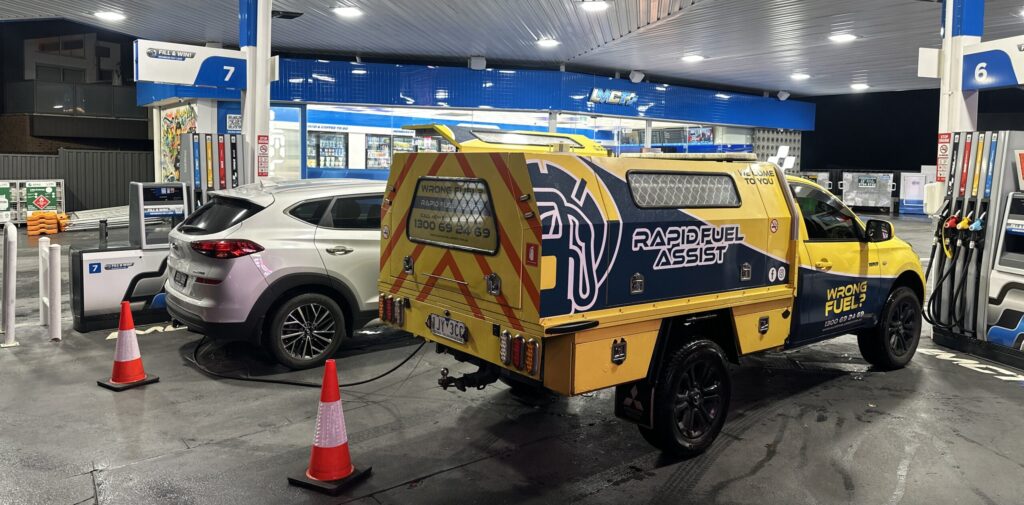
The process is exactly the same as any other job — fast, mobile, and resolved on the spot. We attend your driver’s location across Melbourne Metro, drain and flush the contaminated fuel using specialist equipment, refuel the vehicle with the correct fuel, and confirm engine function before handing it back.
For fleet operators we are available to set up a direct account relationship so that when a driver calls, the process is already in place. The driver does not need to find us, negotiate, or work out how to pay on the spot — it is handled.
We also work directly with fleet insurance and roadside assistance providers who manage vehicle maintenance across a company’s fleet. If your fleet has a managed roadside program that covers misfuelling, we can work within that framework as the attending service.
For more on our dedicated fleet service and account options, see our Fleet and Business Wrong Fuel Melbourne page.
Documentation — What Fleet Managers Receive After Every Job
Every job we attend — fleet or otherwise — receives the same level of documentation. We do not provide a reduced service or reduced record keeping for fleet customers, and we do not provide more for them either. Every customer gets the full picture.
Our job documentation includes photographic records of the vehicle and fuel system from start to finish of the drain and flush process, condition assessment of the vehicle on arrival, engine function check on completion, and a fully itemised invoice covering all services performed including EPA Victoria compliant waste fuel disposal.
For fleet managers this documentation serves a clear purpose — it gives you a verifiable record of the incident, the repair, and the vehicle’s condition on completion. If a question arises later about fuel system condition or vehicle history, the record is there.
Businesses frequently ask for this documentation for their own incident records, insurance purposes, or to update their fleet maintenance history. We provide it as standard.
How to Reduce the Risk of Wrong Fuel in Your Fleet
You cannot eliminate the risk entirely — but you can reduce it significantly with two straightforward measures.
The first is vehicle labelling. Clear, visible fuel type labelling on the external body of the vehicle near the filler neck is far more effective than a sticker inside the door or a note in the glove box. Drivers filling up quickly at a busy servo are not looking inside the car — they are looking at the pump and the filler neck. Labelling at that exact point of interaction is what catches the mistake before it happens. Some fleet operators do this exceptionally well and it is immediately obvious driving behind their vehicles on the road.
The second is driver awareness. Not shame — awareness. Making sure drivers know the fuel type of their assigned vehicle, know what to do if a mistake is made, and know who to call removes the scramble and panic that makes a misfuelling incident worse than it needs to be. A driver who knows to stop immediately, not restart the engine, and call a specialist will cost their company far less than a driver who tries to drive to a mechanic or waits on hold with roadside assistance.
Combine labelling with a clear misfuelling protocol and the incidents that do occur will be resolved faster and cheaper.
Already Have a Wrong Fuel Incident in Progress?
If one of your fleet vehicles has just been misfuelled, call Rapid Fuel Assist on 1300 692 469 now. We attend across Melbourne Metro 7 days a week. Tell us the location, the vehicle, and whether the engine has been started — we will give you a fixed price, a timeframe, and get moving.
Do not send the vehicle to a mechanic on a tow truck unless the engine has sustained damage that requires workshop attention. In the vast majority of misfuelling cases the vehicle can be fully resolved on the spot without any workshop involvement at all.
Wrong fuel in a fleet vehicle in Melbourne? Call Rapid Fuel Assist on 1300 692 469 — mobile, fast, fixed pricing, full documentation, 7 days across Melbourne Metro.
Related Reading
Fleet and Business Wrong Fuel Melbourne — Our Service